In 2027, help clean the river that feeds us all.
The Mahananda runs through the middle of Siliguri. It waters our fields, it fed generations of fishing families, and every New Year the whole city picnics on its banks. Today it carries our sewage. Ten years of court orders have not fixed it. Thousands of us, checking every month, can.
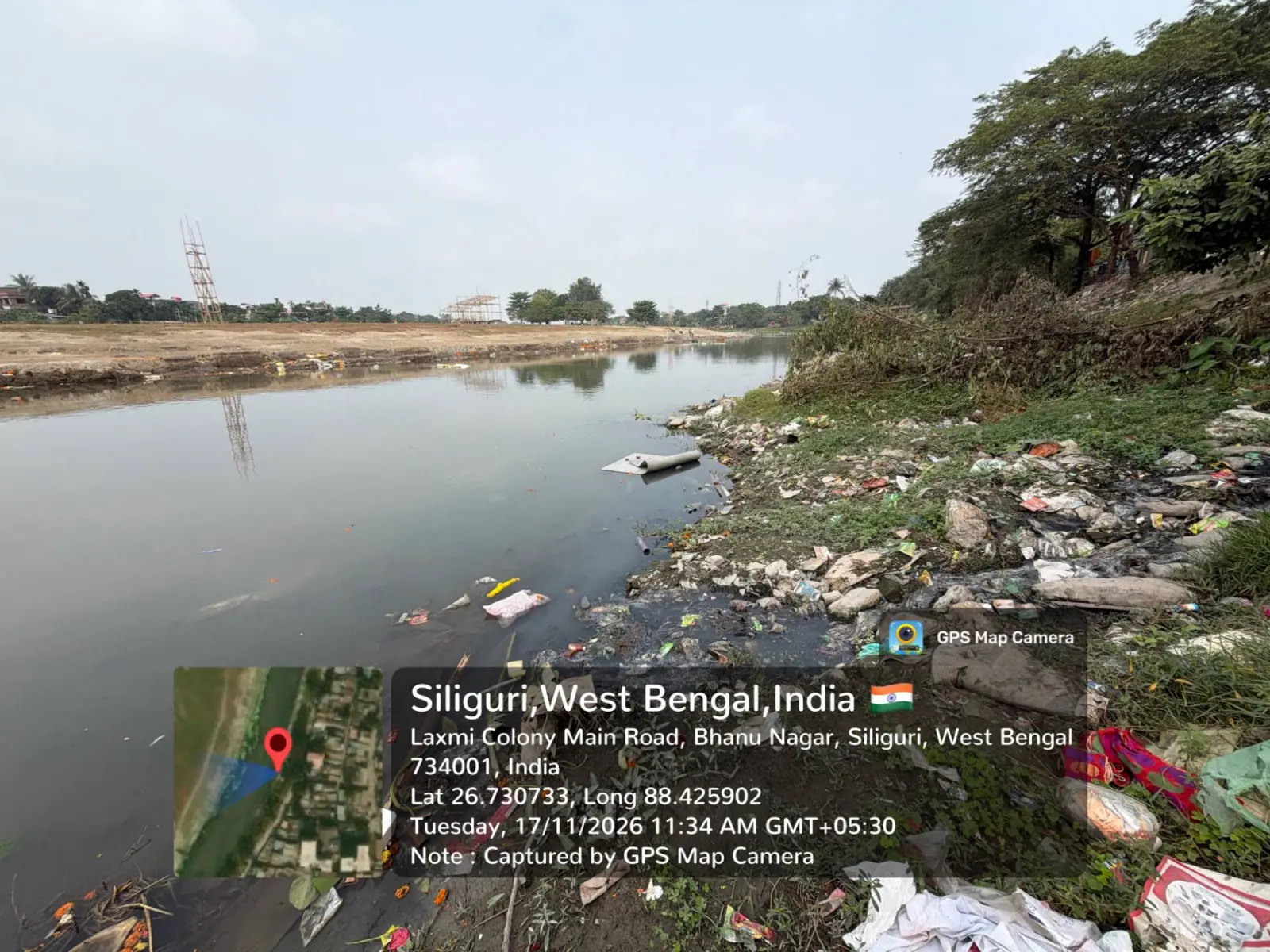
This river is ours. So is the mess.
Most of us cross the Mahananda without looking down. It comes out of the hills above Kurseong at Paglajhora, passes the forests of the Mahananda Wildlife Sanctuary, and enters Siliguri at Champasari. Then it meets us.
It feeds us
Farms at Farabari water their crops with it. Whatever goes into the river goes onto the vegetables we buy.
It fed families for generations
Fishers who once caught 70 to 75 kg a day now say they catch almost nothing. Fish died in the river in February 2019.
It holds our festivals
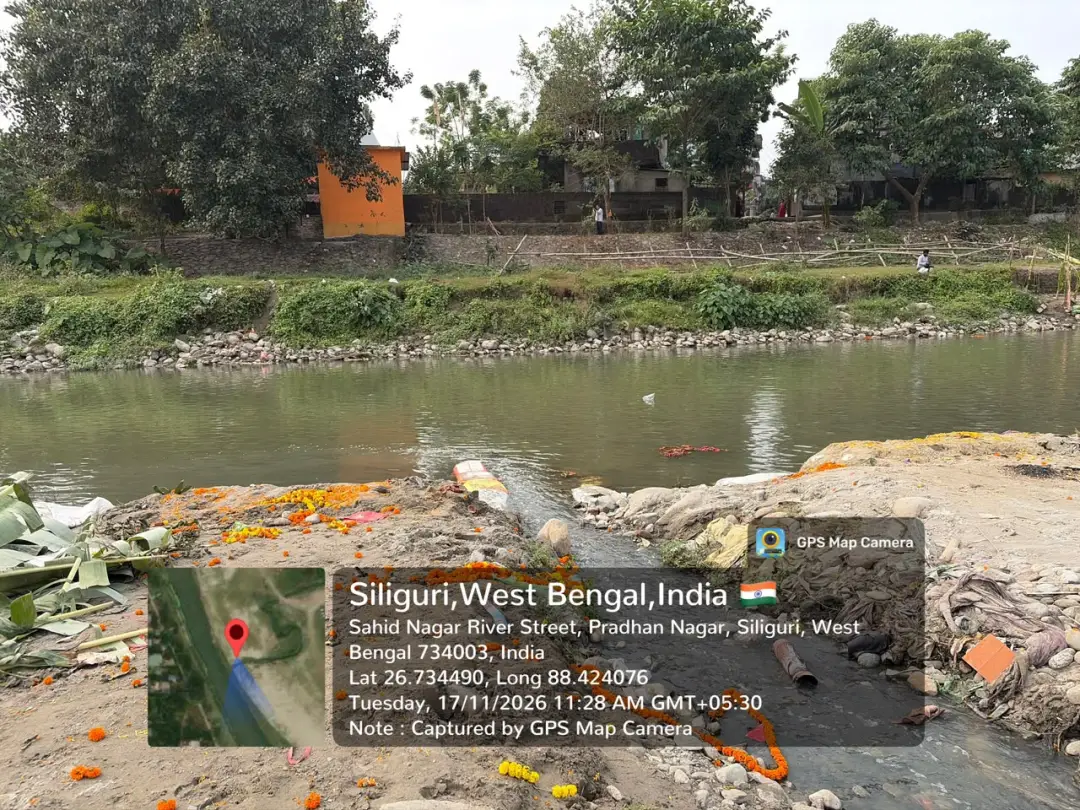
Chhath, Durga Puja immersions, and the Kalpataru Utsav picnics on 1 January all happen on its banks.
It takes our waste
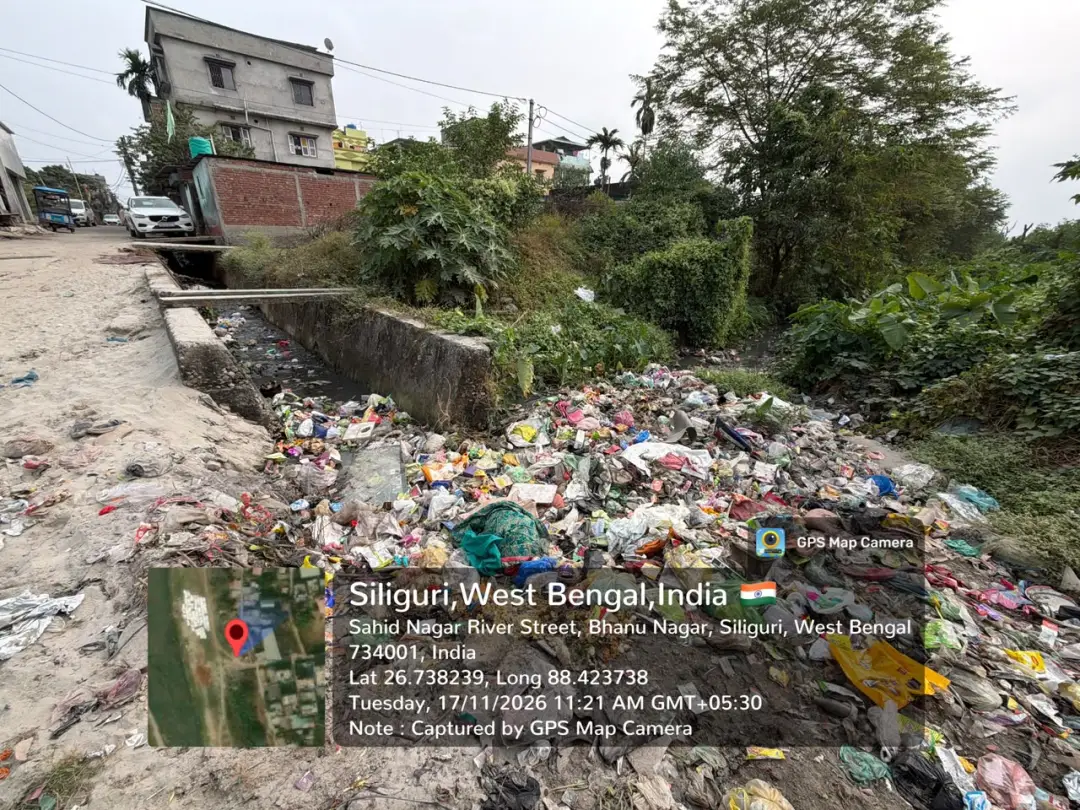
About 154 discharge points pour into it, through 20 main drains. In 2019 the city sent it 44 million litres of sewage a day with no working treatment plant.
Among the most polluted river stretches in India
Faecal coliform at Ramghat is about 51 times the safe limit for bathing: around 128,000 against a limit of 2,500.
From Champasari to Ramghat, coliform jumps from about 11,900 to 128,000. That is the stretch where the city's drains come in.
Discharge points along the river in Siliguri: 94 on the left bank and 60 on the right.
Priority I, the Central Pollution Control Board's worst class, since 2022. In 2018 it was Priority II. It got worse.
Sources: Central Pollution Control Board and West Bengal Pollution Control Board monitoring, CAG audit (2025), National Green Tribunal records, compiled in the Mahananda River Health Report, November 2026. Coliform counts are MPN per 100 ml.
We are not the only ones who depend on this river
The Mahananda begins in a wildlife sanctuary and ends in the Ganga. Between the two, it is home to more life than most of Siliguri has noticed.
Bird species recorded around the river, from kingfishers to migratory waterbirds that come every winter.
Ganges river dolphins, India's national aquatic animal, counted along the Mahananda in 2021, most of them downstream in Bihar. Everything Siliguri pours in flows down to them.
Butterfly species found in a 2026 study upstream, where the water is still clean enough to support them.
What fishers say they catch now on days that once brought in 70 to 75 kg. In the city stretch the fish are already going.
On Pledge Day we also run Siliguri's part of the Asian Waterbird Census at Fulbari. If you know your birds, sign up for the Science and Data group.
This should be the best address in Siliguri
Every traveller to Darjeeling, Sikkim and the Dooars passes through Siliguri, and a river runs right through the middle of it. A clean Mahananda could hold the city's best walks, homestays and evenings out. Instead we have turned our backs on it.
What a clean Mahananda could give us
- A riverside walk where families spend the evening, not just the 1 January picnic.
- Homestays, cafes and tea stalls that face the water, run by the families who live on the banks.
- Birdwatching at Fulbari as a reason for tourists to stay a night longer in Siliguri.
- Ghats clean enough to sit on, swim near and hold festivals without holding your nose.
- Fish back in the river, and an income back for the people who caught them.
What it gives us today
- Walk down to the bank and the smell of the drain reaches you before the water does.
- Nobody sits on the riverbank by choice. Nobody builds a homestay facing a gutter.
- Plastic piled on the banks at Laxmi Colony, Sahid Nagar and Janta Nagar.
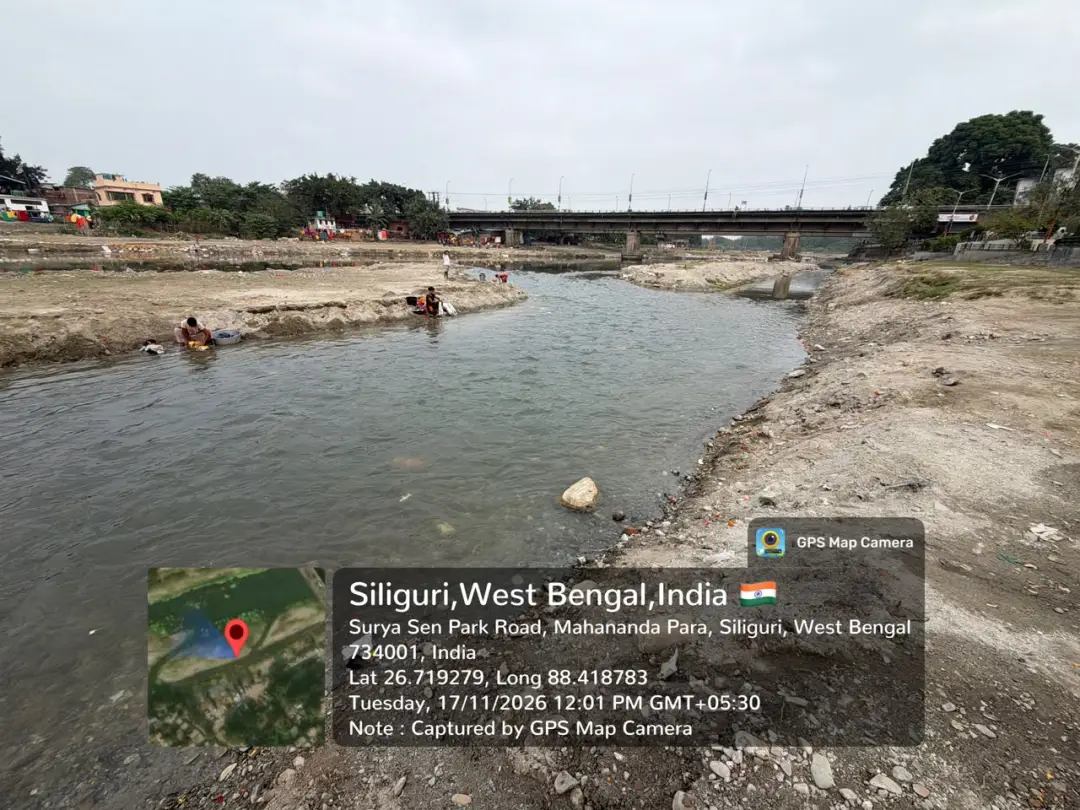
- People who have no other option still washing and bathing downstream of the drains.
- Land along the river encroached at 88 places, recorded by the National Green Tribunal.
We already know how this goes. We have watched it for twenty years.
- 2005
- A Rs 54.28 crore plan to clean the river. It stalled.
- 2016 to 2022
- Order after order from the National Green Tribunal, including Rs 2 crore in compensation in 2021. The river stayed dirty.
- 2022
- The Siliguri stretch drops to Priority I, the worst class in the country.
- 2025
- The CAG audit calls the river "deteriorated" and the sewage system "non-operational".
- 2026
- Rs 361.86 crore is sanctioned under Namami Gange for 25 drains and two treatment plants. We found no sign that any of it is running yet.
- 2027, if nobody watches
- More money on paper, more sewage in the river, more vegetables grown with it, fewer fish, and a smell that keeps the next generation away from the water entirely.
The orders were strong. Follow-through is the gap. Thousands of citizens checking every month can close it.
Four kinds of work, all year
Started by Humrahi Foundation, Save Earth for Life and Plogwarts. We clean, we measure, we use the law, and we publish everything so no one can look away.
Hands in the water
- Cleanups on the first Sunday of every month
- Schools, colleges and offices adopt a stretch
- Every bag weighed and counted
- Festival committees keep the ghats clean
Know the truth
- Water tested every month at 6 points by an accredited lab
- A public map of every drain and outlet
- Waste audits of what we pull out
- Bird, butterfly and dragonfly counts
Ask, then insist
- RTI applications for plans, money and data
- Complaints to the Pollution Control Board
- Notices under the Water Act
- Filed by citizens with volunteer advocates
Publish every month
- A public scorecard on the first week of each month
- Every ward councillor asked to sign the pledge
- The city's agencies invited to work with us
- Our own books open every month
- 1 JanuaryPledge Day. First water test results. Waterbird census at Fulbari. Working groups start.
- FebruaryFirst monthly scorecard. Drain mapping begins. First RTI replies come back.
- MarchThe drain map goes public. First formal complaints filed.
- AprilFirst quarterly report card. Water Act notices where needed.
- 5 JuneWorld Environment Day cleanups and a half-year scorecard.
- July to SeptemberMonsoon. No work in the riverbed. Testing, mapping and paperwork carry on.
- October to NovemberDurga Puja and Chhath ghat cleaning with festival committees.
- 31 DecemberFinal scorecard for the year and the plan for 2028.
What we want to be true by 31 December 2027
- Every stretch we adopt free of visible garbage at every monthly check.
- Every outlet into the river mapped and public, and each one connected to treatment or covered by a written, dated government commitment.
- Twelve months of accredited water tests, with readings moving towards safe levels.
- Every RTI answered or appealed.
Mornings are foggy and cold, around 10°C. We confirm the plan on 31 December, so pledge now and we will message you.
Pledge Day: the city makes one promise
On 1 January families from across Siliguri are already on the riverbanks for Kalpataru Utsav picnics. We will be there too, with pledge desks, hot tea and a plan for the year.
- Where
- Pledge desks on the riverbanks where families picnic, in schools that join us, and online on this page.
- Who
- Anyone who lives in, works in or loves Siliguri. Every pledge counts, wherever it is taken.
- What happens
- We take the pledge together, share the first water test results, and the working groups meet for the first time.
- Bring
- Your family, your friends, and a warm jacket.
Give 2027 a few hours a month
It takes a minute. You will hear from us before Pledge Day, and your working group will reach out after it.
"In 2027 I will give my time to the Mahananda. I will keep my waste out of it, help clean it with my own hands, and keep asking until the river is clean."
What happens after you pledge
- You get a confirmation, and a reminder before 1 January.
- On Pledge Day the working groups meet for the first time.
- The leads of the groups you picked call or message you in January.
Bring your people with you
Schools and colleges
Adopt a stretch of the river, name a teacher or NSS officer, and run student monitors through the year.
Companies
Fund cleanup kits or a whole stretch, give in kind, or send staff volunteers. CSR support goes to cleanups, testing, kits and schools.
Professionals
Lawyers, CAs, doctors and scientists: a few hours a month of your skill goes a long way.
Councillors and officials
Sign the pledge, share data and help with permissions. We would rather work with you than around you.
Festival committees and clubs
Puja and Chhath committees, Rotary, Lions and local clubs: keep your ghats clean and bring your members.
Media
Follow the river with us for a year. We publish the data every month.
Get in touch
Want to partner, sponsor, report a drain, or ask a question we have not answered here? Write or call. A real person replies.
Humrahi Foundation, Parameshwar Niwas, Gudiya Jote, Matigara, Siliguri 734010